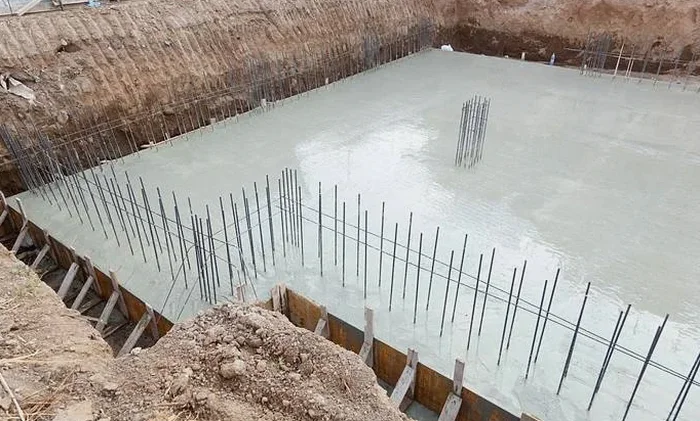
Foundations serve as the critical interface between a structure and the ground beneath it, transferring loads and ensuring long-term stability. In Casper, Wyoming, the significance of proper foundation engineering is amplified by the region's demanding environment. From expansive clay soils to freeze-thaw cycles that can heave and crack inadequately designed footings, the local geology demands a specialized approach. This category encompasses the full spectrum of subsurface structural support, including shallow footings, deep foundation systems, and specialized solutions like pile foundation design, each tailored to mitigate site-specific risks. Whether for a residential home on a hillside or a commercial facility near the North Platte River, understanding Casper's ground conditions is the first step toward a durable project.
Casper sits within the Wyoming Basin, an area characterized by complex sedimentary formations. Much of the city is underlain by the Casper Formation, consisting of interbedded sandstone and limestone, but surficial geology often includes alluvial deposits, colluvium, and significant layers of expansive clay. These clay-rich soils, particularly the Pierre Shale and its weathered derivatives, exhibit high plasticity and undergo substantial volume changes with moisture fluctuation. This shrink-swell behavior is a leading cause of foundation distress in Natrona County, manifesting as differential settlement, cracking slabs, and bowing walls. Additionally, the presence of shallow groundwater in low-lying areas near Casper Creek can complicate excavation and require dewatering during construction, making a thorough geotechnical investigation non-negotiable.
Regulatory compliance in Casper is governed by the International Building Code (IBC) as adopted by the State of Wyoming and locally enforced by the City of Casper Community Development Department. The 2018 IBC, with Wyoming-specific amendments, mandates that foundation designs meet the structural requirements of Chapter 18, which references ASCE 7 for load combinations and ACI 318 for concrete design. Crucially, Section 1803 requires a geotechnical report for most commercial and multi-family projects, detailing soil bearing capacity, lateral earth pressures, and recommendations for foundation type. For deep foundations like piles, the IBC references ASTM D1143 for load testing and requires a registered design professional to oversee installation. Residential projects under the IRC must still adhere to frost protection depth requirements, which in Casper is a minimum of 36 inches, though deeper excavations are often needed to reach competent bearing strata.
The types of projects that demand robust foundation solutions in Casper are diverse. Hillside constructions on Casper Mountain's slopes frequently require deep foundation systems to resist lateral sliding and overturning, making pile foundation design a common specification. Commercial developments in the Old Yellowstone District, where historic fill and variable soils are prevalent, often rely on ground improvement or rigid inclusion systems to create a uniform bearing platform. Industrial facilities, such as those supporting the energy sector, may need heavy-duty mat foundations capable of withstanding dynamic loads from compressors or heavy equipment. Even seemingly straightforward residential additions can uncover unforeseen soil conditions, underscoring the need for a site-specific foundation strategy from the outset.
The predominant issue is differential settlement caused by expansive clay soils that shrink and swell with moisture changes. This leads to cracked slabs, sticking doors, and stair-step cracks in masonry. Frost heave during severe winters can also lift shallow footings if they lack proper depth and drainage, while hillside erosion may undermine foundations over time.
The locally adopted building code specifies a minimum frost protection depth of 36 inches for footings. However, this is a minimum; a geotechnical engineer may recommend deeper embedment to reach competent, non-expansive bearing strata or to bypass zones of seasonal moisture fluctuation, especially in areas with high clay content.
Deep foundations become necessary when near-surface soils are too weak, expansive, or compressible to support structural loads. This is common on steep slopes, in areas with thick alluvial deposits, or where a high water table exists. Piles transfer loads to deeper, more stable strata, bypassing the problematic surface layers entirely.
A comprehensive report includes soil borings with SPT N-values, laboratory testing for Atterberg limits and expansion potential, groundwater observations, and engineering recommendations. It specifies allowable bearing capacity, lateral earth pressures, foundation type and depth, and any required special considerations like drainage, reinforcement, or corrosion protection for steel piles.
We serve projects across Casper Wyoming and surrounding areas.