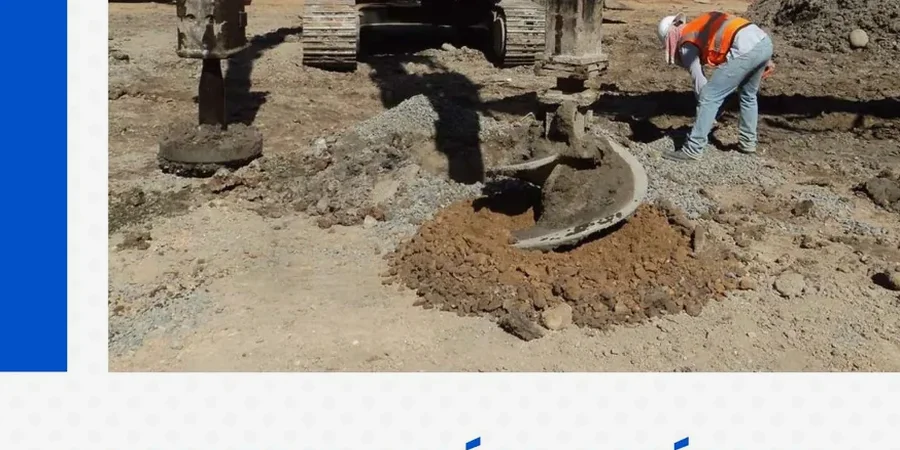
The most expensive mistake we see in Casper is treating the entire site as uniform ground. A developer runs a few shallow borings near the North Platte River, assumes competent gravel, and then hits five feet of saturated alluvium on the far side of the lot. That re-design during construction — when footings are already formed — can cost more than the ground improvement itself. Stone column design in Casper Wyoming requires mapping the transition from terrace deposits to fine-grained basin fill, because the bearing capacity can drop by half within a hundred feet. We combine CPT testing to get a continuous stratigraphic profile with grain-size analysis on disturbed samples, so the vibro-replacement pattern is sized correctly for the actual fines content, not an assumed value from a county soil survey.
In Casper's collapsible loess, stone columns do more than reinforce — they provide drainage paths that prevent saturation-triggered settlement during spring snowmelt.