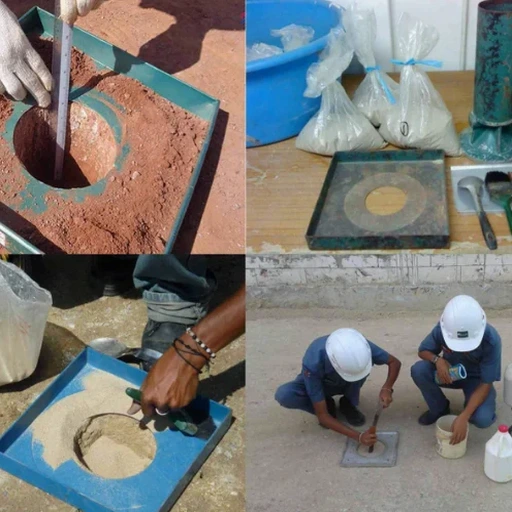
The most common headache we see in Casper is a grader operator who thinks he hit spec because he counted his passes. Then the sand cone test comes back at 88% on a structural fill that needed 95. The problem isn’t the operator — it’s the soil. Casper sits on a mix of residual sandstones, windblown loess, and silty clays from the North Platte River terrace. The moisture-density relationship shifts fast here. You compact silty sand in the morning at 12% moisture and by 2 p.m. the dry wind has pulled you down to 7% and your proctor curve is worthless. We run the Proctor tests in our lab to nail the reference curve the same week the fill goes in, because the correlation degrades fast when the borrow source changes. For deeper verification under heavily loaded pads, pairing the sand cone with SPT drilling gives you a cross-check of relative density down to 15 feet, which matters when you’re on the Casper formation’s interbedded weak siltstones.
In Casper’s high-desert climate, a sand cone test that ignores evaporation-driven moisture loss during the test is a pass that becomes a failure by the time the report is written.