GEOTECHNICAL ENGINEERING
CASPER WYOMING
HomeSeismicSeismic microzonation

Seismic Microzonation Studies in Casper Wyoming

Evidence-based design. Reliable delivery.

LEARN MORE

At 5,150 feet above sea level on the Laramie Plains, Casper deals with a mix of wind-blown silt and weathered sandstone that amplifies ground motion differently from one parcel to the next. The 1984 M5.3 earthquake near Douglas rattled downtown Casper hard enough to crack unreinforced masonry, and since then the city has tightened building requirements in critical areas. A seismic microzonation study maps these variations block by block, giving engineers the site-specific spectra and amplification factors that generic code values simply cannot capture. We run MASW transects across the North Platte River terraces to get Vs30 profiles, then overlay the results with liquefaction susceptibility screening in the alluvial deposits near the river.

Two lots separated by 200 feet in Casper can face a 40 percent difference in short-period spectral acceleration. We map that difference.
Our service areas

How we work

Casper grew outward from the railroad yards and refinery flats, where fill and natural soils intermingle without much documentation. That history matters: we have measured Vs30 values swinging from 280 m/s in the softer Casper Creek alluvium to over 600 m/s on the Casper Mountain foothills within a single project boundary. The microzonation process integrates borehole data, surface wave surveys, and geotechnical lab testing to define response spectra per ASCE 7-22 Chapter 21.
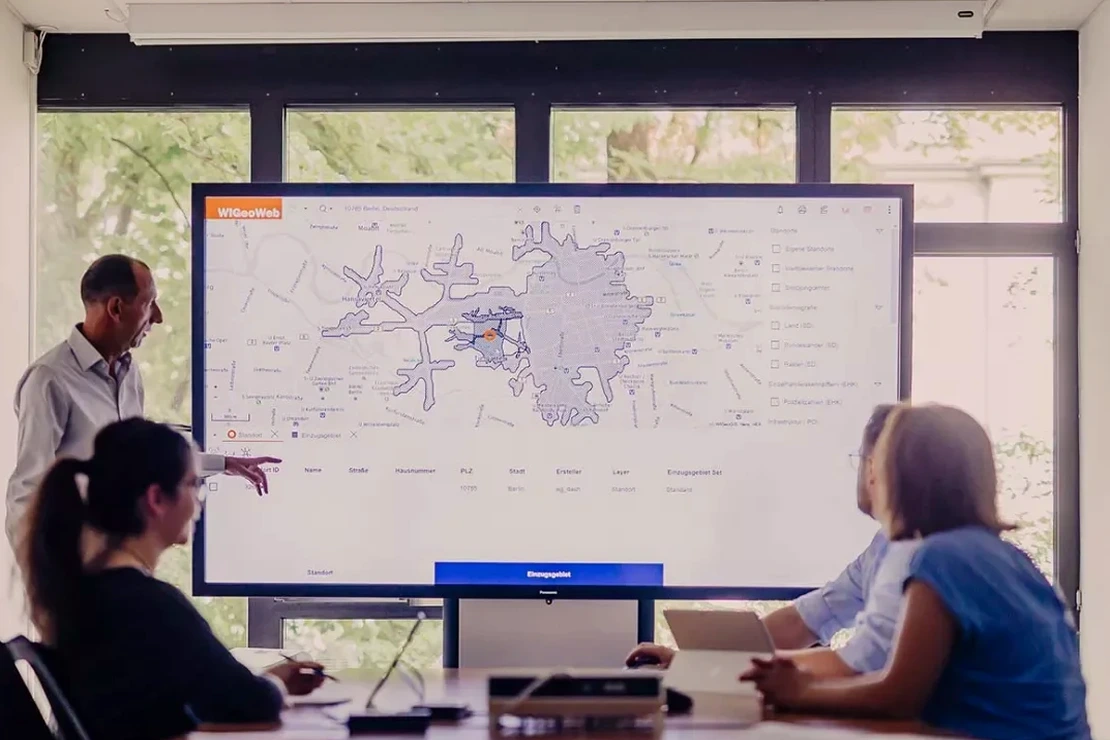
  • Site class boundaries mapped on GIS from direct Vs30 measurements
  • Ground response analysis using DEEPSOIL or equivalent nonlinear codes
  • Liquefaction potential index (LPI) contours for saturated sandy lenses
  • Shaking intensity maps for 475-year and 2475-year return periods
Seismic Microzonation Studies in Casper Wyoming
Technical reference — Casper Wyoming

Site-specific factors

Downtown Casper sits on relatively shallow bedrock with firm site class C, while the industrial corridor along Amoco Road and the riverfront rests on looser alluvium that classifies as site D or even E in isolated pockets. That contrast means a structure designed for the same mapped spectral acceleration can experience twice the drift if the foundation sits on the wrong material. The biggest exposure lies in the pre-1990 building stock near the North Platte, where liquefaction-induced settlement and lateral spreading could damage shallow footings and buried utilities. A microzonation study identifies these transitions before a single footing is poured, allowing the design team to switch from prescriptive to site-specific spectra and avoid costly post-earthquake surprises.

Need a geotechnical assessment?

Reply within 24h.

Email: contact@geotechnicalengineering1.org

Applicable standards

ASCE 7-22 Minimum Design Loads, IBC 2021 Chapter 16, ASTM D4428/D4428M-14 (crosshole seismic), ASTM D7400-19 (downhole seismic), NCEER/Youd-Idriss liquefaction triggering

Technical parameters

ParameterTypical value
Vs30 measurement methodMASW, downhole, or crosshole per ASTM D4428/D7400
Site class range in Casper basinC (dense sand/gravel) to D (stiff clay/silt)
Typical ground motion periods assessed0.2s (short) and 1.0s (long) per ASCE 7
Liquefaction screening depthTop 50 ft, following NCEER/Youd-Idriss procedure
GIS deliverable formatShapefile or GeoJSON with site class, PGA, and LPI attributes
Seismic source consideredCasper Arch, Laramie Range, and background seismicity per USGS NSHM
Amplification factors computedFa and Fv per ASCE 7 Table 11.4-1 and 11.4-2

Common questions

What is the typical cost range for a seismic microzonation study in Casper?
Which site classes commonly appear in Casper?

The majority of the built area falls into site class C or D. The foothills south of Wyoming Boulevard give class C with Vs30 above 360 m/s, while the river terraces and alluvial fans north of the railroad typically produce class D. Isolated softer lenses near old creek beds can dip into class E.

How does the microzonation integrate with ASCE 7 structural design?

We provide site-specific Fa and Fv amplification factors, MCE and design spectra, and PGA values that the structural engineer feeds directly into Chapter 11 and 21 of ASCE 7-22. The study also flags any deamplification or basin-edge effects that the default code coefficients would miss.

How long does a microzonation study take from field work to final report?

A standard site-specific study in Casper runs four to six weeks. Field work takes three to five days depending on the number of MASW lines and boreholes. Lab testing and analysis consume two to three weeks. Final GIS deliverables and the signed report add another week.

Location and service area

We serve projects across Casper Wyoming and surrounding areas.

View larger map