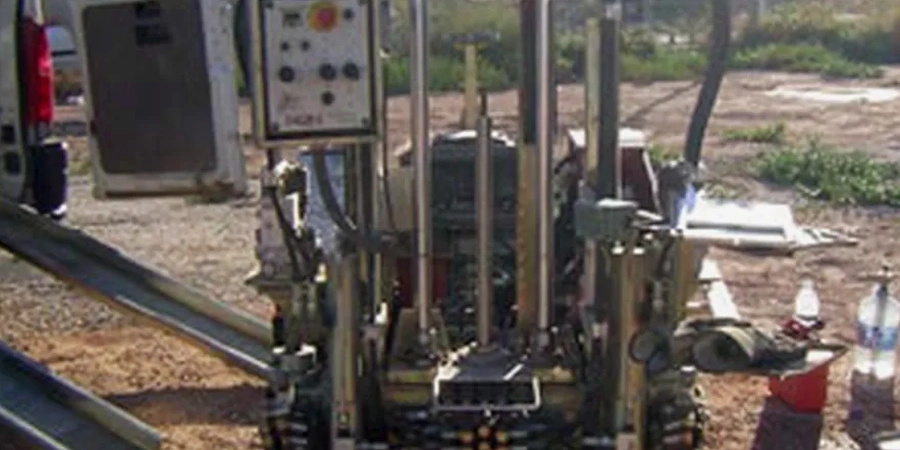
ASCE 7 and the International Building Code require site-specific geotechnical data for any structure category II or higher, and in Casper Wyoming that requirement carries weight beyond the paperwork. The city sits at 5,150 feet on the Laramie Plains, where the North Platte River has deposited sequences of alluvial silts, sands, and gravels over the Casper Formation sandstone — a stratigraphic puzzle that standard borings can miss when thin soft layers hide between competent strata. The ASTM D5778 CPT (Cone Penetration Test) fills that gap because it records tip resistance, sleeve friction, and pore pressure every two centimeters without ever pulling a sample. For developers working near the river corridor or up toward Casper Mountain where colluvium complicates bearing estimates, the CPT provides a nearly continuous log that no split-spoon recovery ratio can match. We combine it with SPT drilling when correlation with local experience is needed, and with liquefaction assessment because the Young and Idriss 2001 procedure now relies heavily on normalized CPT data for cyclic resistance ratio calculations.
Two-centimeter continuous profiling with CPT reveals thin silt lenses and liquefiable layers that standard SPT intervals routinely miss in Casper's alluvial floodplain deposits.