Evidence-based design. Reliable delivery.
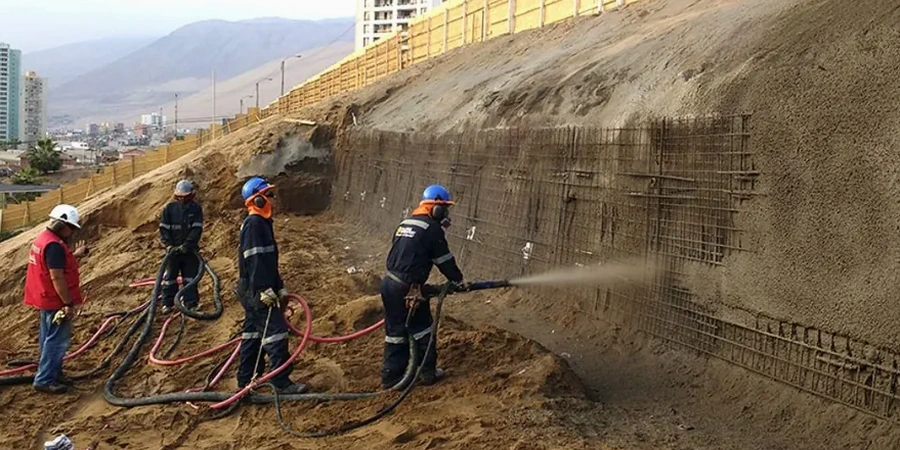
LEARN MORESlopes and walls are fundamental to safe and stable construction across Casper, Wyoming, where the natural topography presents both opportunities and significant geotechnical challenges. This category encompasses the analysis, design, and stabilization of earthen slopes and structural retaining systems that resist lateral soil pressures. In a city bordered by Casper Mountain and dissected by the North Platte River, the integrity of these features directly protects property, infrastructure, and lives from landslides, erosion, and structural failure. Whether for a residential lot backing onto a steep grade or a commercial development near a waterway, professional slope and wall engineering is not optional—it is essential for regulatory compliance and long-term durability.
Casper's geological setting is dominated by sedimentary formations typical of the Wyoming Basin, including interbedded sandstones, siltstones, and expansive clay shales from the Cretaceous-era Mesaverde Group and underlying Cody Shale. These clay-rich soils are particularly prone to swelling when wet and shrinking during dry spells, creating cyclic movement that can destabilize both natural slopes and engineered fills. The freeze-thaw cycles common to Casper's high-plains climate exacerbate weathering and reduce soil strength over time. Understanding these local conditions is critical, which is why a thorough slope stability analysis must account for Casper-specific geotechnical parameters like plasticity indices and groundwater fluctuations, not just generic textbook values.
Regulatory requirements in Casper and Natrona County are governed by the International Building Code (IBC) as adopted by the State of Wyoming, with local amendments enforced by the Casper Community Development Department. Chapter 18 of the IBC mandates geotechnical investigations for any structure supported by or adjacent to slopes steeper than 3:1 (horizontal:vertical), while retaining walls over four feet in height typically require a professional engineer's design and a building permit. The City of Casper's floodplain management ordinance adds another layer of oversight for walls near waterways, referencing FEMA guidelines and requiring no-rise certifications where applicable. Adherence to these standards is non-negotiable for obtaining construction approval and ensuring insurability.
Projects requiring these services are diverse and widespread throughout the Casper area. Hillside residential developments in Paradise Valley and along Casper Mountain Road routinely need engineered retaining wall design to create buildable pads and prevent downslope creep. Commercial infrastructure, such as the retaining structures supporting parking lots along Wyoming Boulevard or stream stabilization along Garden Creek, demands robust wall systems that can handle both static and hydrostatic loads. For deep excavations or bridge abutments near the North Platte River, active/passive anchor design provides the necessary lateral restraint in confined spaces where conventional gravity walls are impractical. Even public works projects, including trail stabilization on Casper Mountain and erosion control along the Platte River Parkway, fall squarely within this category's scope.
In Casper, a building permit is generally required for any retaining wall exceeding four feet in height measured from the bottom of the footing, or for walls of any height supporting a surcharge like a driveway or structure. Walls in flood hazard areas also require additional review for floodplain compliance per local ordinances.
The expansive clays and shales of the Cody and Mesaverde formations are the primary concern. These soils experience significant volume changes with moisture fluctuations, leading to progressive weakening. Seasonal freeze-thaw cycles further fracture the near-surface soils, reducing shear strength and increasing the risk of shallow landslides and sloughing.
Active anchors are tensioned to a design lock-off load immediately after installation, actively applying a force to restrain the wall or slope. Passive anchors are not tensioned until the ground deforms and loads them, relying on soil movement to develop resistance. The choice depends on allowable deformation and the required factor of safety for the project.
Yes, alternatives include soil nailing, vegetated geogrid-reinforced slopes, and drainage improvements to lower groundwater. A site-specific slope stability analysis can determine if regrading and subsurface drainage alone can achieve an acceptable factor of safety, or if a smaller structural element combined with reinforcement is sufficient.
We serve projects across Casper Wyoming and surrounding areas.