GEOTECHNICAL ENGINEERING
CASPER WYOMING
HomeInvestigationExploratory test pit

Exploratory Test Pit Services in Casper Wyoming

Evidence-based design. Reliable delivery.

LEARN MORE

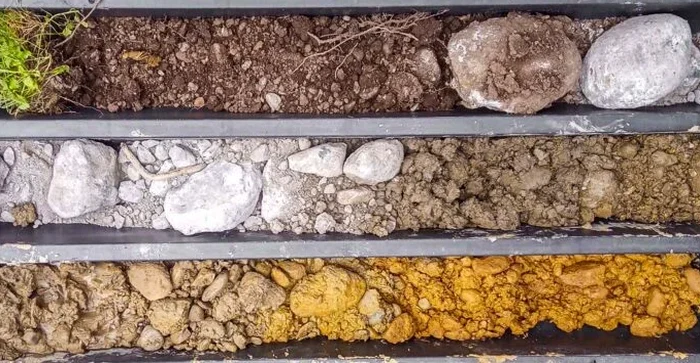
A contractor in Casper hit a buried gravel lens at four feet during a foundation excavation last spring. The geotechnical report hadn't flagged it. That's the reality of building on the North Platte River terraces—stratigraphy changes fast. An exploratory test pit lets you see the soil profile with your own eyes before the backhoe ever arrives. In Casper's semi-arid climate, near-surface soils can mask deeper problems like caliche layers or uncompacted historic fill. The test pits we log follow ASTM D2487 for visual-manual classification. Disturbed samples go straight to the lab for index testing. We correlate pit observations with grain size analysis to confirm field classifications. For sites near the river or in older parts of town, a test pit reveals what the drill rig might miss.

A single well-logged test pit in Casper's terrace gravels can replace three borings when the stratigraphy is laterally continuous.
Our service areas

How we work

Casper sits at 5,150 feet elevation on a high plains terrace system. Winter freeze-thaw cycles here reach depths of 36 to 48 inches. That's critical for shallow foundation design. An exploratory test pit documents the full soil column from surface organics down to the bearing stratum. The pit walls expose structure directly—no split spoon disturbance, no CPT sleeve friction approximation. Logging includes Munsell color, moisture condition, consistency for cohesive soils, and density for granular layers. Our field team records GPS coordinates tied to the Casper North American Datum. When caliche is present, we note its thickness and degree of cementation. This matters for excavatability and pier drilling estimates. The data feeds directly into allowable bearing pressure calculations per IBC Chapter 18.
Exploratory Test Pit Services in Casper Wyoming
Technical reference — Casper Wyoming

Site-specific factors

Unshored pits in Casper's sandy alluvium collapse fast. We've seen vertical walls fail within hours after excavation. OSHA Subpart P applies. Any pit deeper than five feet requires benching or a protective system. That's not a recommendation—it's federal regulation. Another local risk is misidentifying wind-deposited loess as competent clay. Loess stands vertically when dry but collapses dramatically when wetted. A simple field test—dropping a dry clod in water—reveals the difference. Ignoring this step has caused foundation settlement in several Casper residential subdivisions built on the terrace edges. The test pit provides the visual evidence needed to flag collapsible soils before the structural engineer finalizes footing dimensions.

Need a geotechnical assessment?

Reply within 24h.

Email: contact@geotechnicalengineering1.org

Applicable standards

ASTM D2487 – Standard Practice for Classification of Soils for Engineering Purposes (USCS), ASTM D2488 – Standard Practice for Description and Identification of Soils (Visual-Manual Procedure), OSHA 29 CFR 1926 Subpart P – Excavation and Trenching Safety, IBC Chapter 18 – Soils and Foundations

Technical parameters

ParameterTypical value
Maximum investigation depth12 ft (typical); deeper with shoring
Visual classification standardASTM D2487 (USCS)
Sample typeDisturbed bulk samples (5-gallon pails)
Logging detailStratum boundaries, Munsell color, moisture, consistency/density
Groundwater observationStabilized water level if encountered within pit depth
Backfill specificationCompacted native soil in lifts per project requirements
Typical turnaroundField log same day; lab results 5–7 working days

Common questions

How deep can a test pit go in Casper's soil conditions?

Most pits reach 10 to 12 feet with a standard trackhoe. Beyond that, trench safety requirements become complex. In Casper's alluvial soils, pit walls in granular material need benching shallower than five feet. If the target bearing stratum is deeper, we typically switch to SPT drilling to continue the investigation safely.

What does an exploratory test pit cost in Casper?
Can you identify groundwater with a test pit?

Yes, if the water table is within the excavated depth. We record the stabilized water level after the pit is opened. In Casper, groundwater along the North Platte corridor can be shallow—sometimes six to eight feet below grade. That observation goes directly into the foundation drainage design recommendations.

Location and service area

We serve projects across Casper Wyoming and surrounding areas.

View larger map